

Skipping minor repairs before selling or renting your Middle Georgia home feels like a smart shortcut until it costs you thousands at the negotiating table. Most homeowners assume buyers and renters will overlook a dripping faucet, a sticky door, or a few scuffed walls. The truth is that deferred maintenance depresses market value and triggers lower offers, repair credits, and prolonged transactions. Those "small things" you planned to skip are often the exact things that make a buyer walk away or a renter choose the property down the street instead.
Table of Contents
- How minor repairs shape buyer and renter decisions
- The real cost: Why delaying minor repairs is risky
- Boosting value and retention: Why landlords shouldn't ignore the little things
- What to fix (and what to skip): Prioritizing minor repairs smartly
- Why the 'small stuff' is actually your home's biggest secret weapon
- Get help with minor repairs in Middle Georgia
- Frequently asked questions
Key Takeaways
| Point | Details |
|---|---|
| Small fixes matter | Minor repairs help preserve value and increase appeal to buyers and tenants. |
| Delay costs more | Leaving minor issues unaddressed can grow into expensive repair bills. |
| Prioritize repairs | Address safety, water, structural, and high-visibility flaws first for the best return. |
| Rental success | Timely repairs keep tenants happy and reduce maintenance costs for landlords. |
| Not all repairs needed | Some cosmetic defects can be skipped if they don’t impact price or function. |
How minor repairs shape buyer and renter decisions
First impressions in real estate are not just about curb appeal and staging. They are about trust. When a potential buyer or renter walks through a home and notices a cracked outlet cover, a leaky faucet under the sink, or a door that won't close properly, their brain immediately starts asking a bigger question: "What else is wrong here?"
That instinct is not irrational. Buyers and renters use visible defects as signals. A small, unaddressed problem suggests a pattern of neglect. It tells them the owner either did not notice or did not care, and neither message helps you close a deal at your asking price.
Here is what tends to happen in practice:
- Buyers mentally add up every visible flaw and inflate the cost in their heads, often overestimating repair costs by two to three times the actual amount.
- Renters compare properties side by side, and a well-maintained unit almost always wins over one with obvious wear and tear.
- Real estate agents report that homes with visible minor issues receive more inspection repair requests and lower initial offers.
- Lenders for FHA and VA loans sometimes require repairs before approving financing, meaning a loose railing or peeling paint can literally block a sale.
"Fixing minor, high-objection items helps sellers attract more traditional buyers and reduce negotiation friction." Redfin notes that selling as-is only makes sense when repairs clearly outweigh the return or when time and cash are genuinely constrained.
The numbers back this up. Homes that need obvious repairs typically sell 10 to 20% below full market value. On a $250,000 home in Middle Georgia, that gap could mean $25,000 to $50,000 left on the table. Compare that to the cost of patching drywall, replacing door hardware, and fixing a slow drain, and the math is not even close.
The same logic applies to rentals. A unit that looks cared for commands higher monthly rent and attracts tenants who are more likely to treat the property well. Presentation signals quality, and quality justifies price.
The real cost: Why delaying minor repairs is risky
Understanding how buyers and renters perceive your home is one thing. Understanding what happens to your wallet when you delay repairs is another conversation entirely.
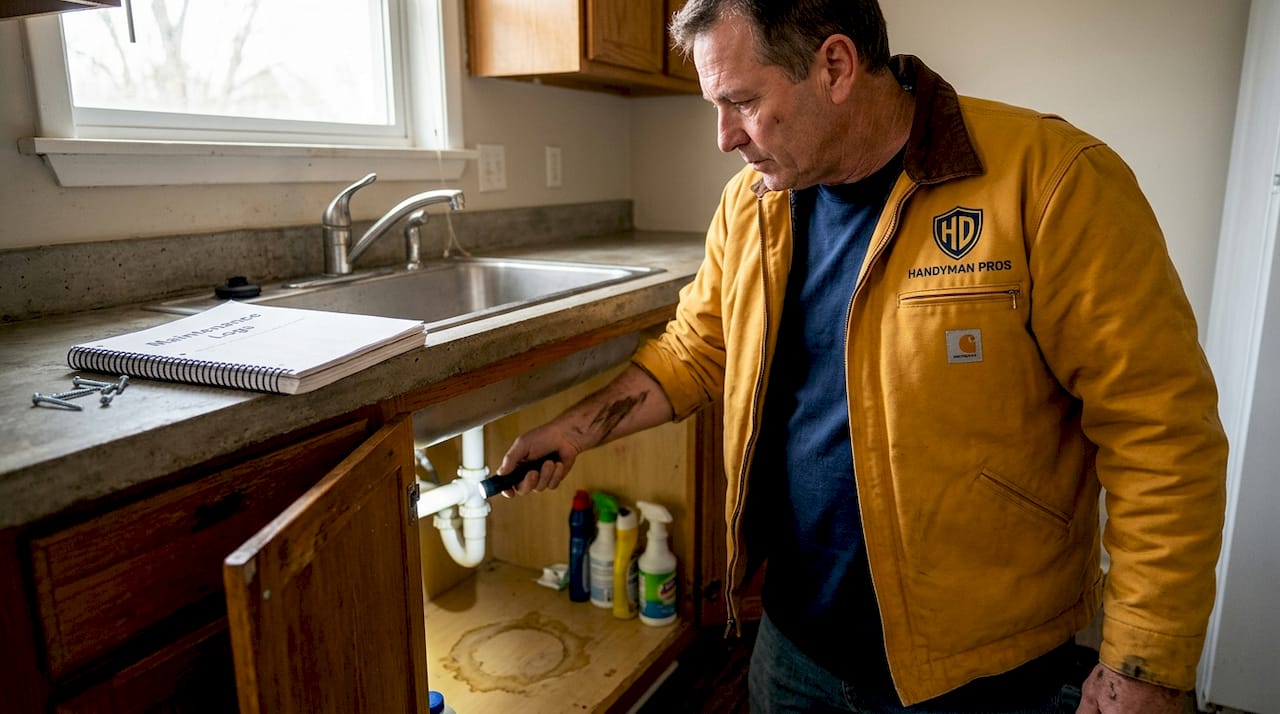
Most people think of deferred maintenance as a neutral choice, something you deal with later. In reality, small repairs matter because they prevent escalation into water damage, structural problems, mold, and much larger repair bills. Waiting is almost never free.
Here is how small problems grow into expensive ones:
- A slow roof leak goes unnoticed for one season. By the next, you have damaged insulation, rotted decking, and potential mold in the attic. A $200 repair becomes a $6,000 project.
- A loose toilet base lets moisture seep into the subfloor over months. What started as a simple re-seal turns into subfloor replacement costing $1,500 or more.
- A sticky exterior door that doesn't seal properly lets humidity and pests in. Over time, the door frame warps, and you're replacing the entire unit instead of just adjusting the hinges.
- A small crack in caulking around a tub or shower allows water to penetrate the wall cavity. Mold remediation in Middle Georgia's humid climate can run $2,000 to $10,000 depending on the extent.
- A dripping outdoor faucet in winter can freeze and burst the pipe behind the wall, causing water damage that costs far more than a $15 washer replacement.
Pro Tip: Walk through your home once every three months with a notepad. Write down anything that looks off, sounds unusual, or feels loose. A 30-minute quarterly walkthrough can save you from a $5,000 emergency repair.
Here is a quick look at how repair costs escalate when issues are left unaddressed:
| Minor issue (fix now) | Estimated cost | If ignored, becomes | Estimated cost |
|---|---|---|---|
| Dripping faucet | $75 to $150 | Pipe corrosion or water damage | $500 to $3,000 |
| Loose toilet base | $100 to $200 | Subfloor rot | $1,000 to $3,500 |
| Small roof leak | $150 to $300 | Mold and decking damage | $3,000 to $8,000 |
| Cracked caulk in bath | $50 to $100 | Mold remediation | $2,000 to $10,000 |
| Sticky door or window | $75 to $150 | Frame replacement | $500 to $2,000 |
The pattern is consistent: the longer you wait, the more you pay. Proactive repairs are almost always a fraction of the cost of reactive emergency fixes.
Boosting value and retention: Why landlords shouldn't ignore the little things
If you own rental property in Middle Georgia, minor repairs are not just about aesthetics. They are a direct investment in your income stream and your relationship with the people who pay your mortgage.
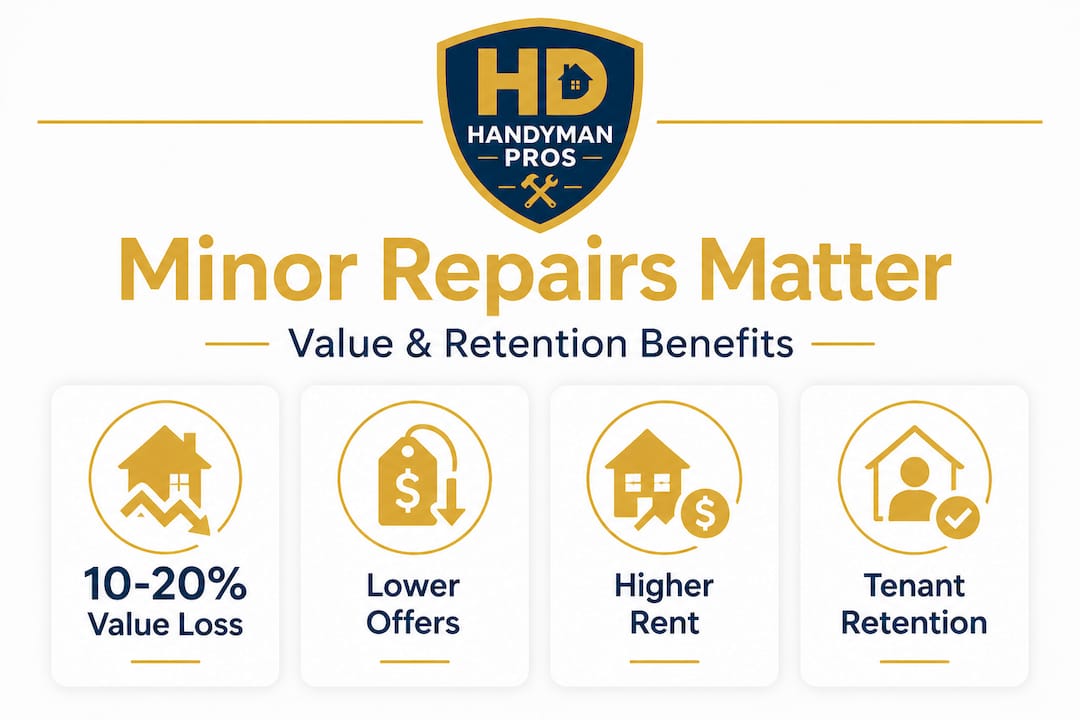
Fixing minor items helps tenant satisfaction and retention while reducing the odds of reactive, costlier maintenance down the line. Landlords who respond quickly to small repair requests build trust with their tenants. That trust translates into lease renewals, which saves you the cost of vacancy, marketing, cleaning, and re-leasing a unit.
Consider what tenant turnover actually costs. In Middle Georgia, the average cost to turn over a rental unit, including cleaning, touch-up painting, minor repairs, and lost rent during vacancy, can easily reach $2,000 to $4,000 per unit. If a tenant leaves because you ignored three small repair requests over six months, that is an expensive lesson.
Here are the specific benefits landlords gain from staying on top of minor repairs:
- Lower emergency costs. A tenant who reports a small leak gets it fixed for $100. A tenant who stops reporting problems because nothing gets done lets that leak become a $4,000 mold issue.
- Better tenant quality. Well-maintained properties attract tenants who take pride in where they live. Neglected properties attract tenants who match that energy.
- Stronger lease renewal rates. Tenants who feel heard and respected renew leases at much higher rates. Reducing turnover by even one cycle per property per year adds thousands to your annual net income.
- Legal protection. In Georgia, landlords have a legal obligation to maintain habitable conditions. Ignoring minor repairs that affect health or safety can expose you to liability.
- Higher rent justification. A property in excellent condition commands above-average rent. Tenants pay a premium for a landlord who is responsive and a home that works properly.
Pro Tip: Create a simple repair log for each rental property. When a tenant reports an issue, log the date, the problem, and when it was resolved. This protects you legally and helps you spot patterns, like a recurring plumbing issue that signals a bigger underlying problem.
What to fix (and what to skip): Prioritizing minor repairs smartly
Not every repair is worth doing before you sell or rent. The goal is to maximize your return on the time and money you invest in repairs, not to renovate the entire house before listing it. Smart prioritization separates the repairs that move the needle from the ones that don't.
Prioritize repairs focused on safety, functionality, and highly visible issues. Anything that will be flagged in a home inspection or that a buyer or renter will notice within the first five minutes of walking in deserves your attention first.
Here is a practical priority framework:
- Safety issues first. Loose railings, exposed wiring, broken smoke detectors, and damaged steps are non-negotiable. These will fail inspections and create liability.
- Water-related issues second. Any sign of a leak, stain, or moisture problem needs to be addressed before it becomes a mold issue or a structural concern.
- First-impression items third. Fresh paint on scuffed walls, repaired door hardware, fixed cabinet hinges, and patched nail holes cost very little but dramatically change how a space feels.
- Functional items fourth. Doors and windows that stick, faucets that drip, outlets that don't work, and light fixtures that flicker all signal poor maintenance.
- Cosmetic low-ROI items last (or skip). Replacing dated but functional light fixtures, upgrading appliances, or remodeling a bathroom that works fine are often not worth the investment before selling.
| Repair type | Fix before selling/renting? | Reason |
|---|---|---|
| Water leaks or stains | Always | Inspection flags, mold risk |
| Safety hazards | Always | Legal liability, inspection failure |
| Broken hardware | Yes | First impression, low cost |
| Scuffed or chipped paint | Yes | Visible neglect signal |
| Sticky doors or windows | Yes | Function and comfort |
| Outdated but working kitchen | Optional | Low ROI unless major |
| Cosmetic bathroom update | Usually skip | High cost, low return |
| Old carpet (clean and functional) | Clean, don't replace | Cost vs. return |
Pro Tip: Before spending a dollar on repairs, ask your real estate agent or property manager which items buyers or renters in your specific neighborhood are most sensitive to. Local insight matters more than generic advice, and a professional who knows the Middle Georgia market can save you from over-investing in the wrong fixes.
Document every repair you make. Keep receipts, photos, and notes on what was done and when. This documentation builds confidence with buyers during negotiations and protects landlords during tenant disputes or inspections.
Why the 'small stuff' is actually your home's biggest secret weapon
Here is something most repair guides won't tell you: minor repairs are not just about fixing problems. They are about communicating something important to every person who walks through your door.
When a buyer or renter sees a home where everything works, where the doors close smoothly, the faucets don't drip, the walls are clean, and the hardware is tight, they don't just see a well-maintained house. They see a seller or landlord who pays attention. That perception is worth more than any single repair.
In our experience working with homeowners across Middle Georgia, the properties that sell fastest and at the strongest prices are rarely the most renovated. They are the ones that feel cared for. There is a difference. A renovated home might have a new kitchen and still feel neglected if the closet door drags on the floor and the bathroom faucet has a slow drip. A modest home with original finishes but zero deferred maintenance feels solid and trustworthy.
Buyers are not just buying walls and a roof. They are buying their future stress level. A home that shows no signs of neglect tells them: "The previous owner took care of this place, and you probably won't inherit any surprises." That message is powerful, and it is built entirely out of small, inexpensive repairs.
The same principle applies in the rental market. Middle Georgia renters have options. When they tour a unit and every light switch works, every door closes properly, and the place smells clean and fresh, they feel confident signing a lease. When they see obvious deferred maintenance, they wonder what the landlord will be like when something goes wrong.
Minor repairs are your first and most credible form of marketing. They cost a fraction of what staging, photography, or price reductions cost, and they deliver a message that no listing description can replicate.
Get help with minor repairs in Middle Georgia
Tackling a list of minor repairs before selling or renting can feel overwhelming, especially when you're managing a timeline, coordinating showings, or juggling other properties. The good news is that you don't have to handle it all yourself.

Working with professional handyman services in Middle Georgia means you can hand off that repair list and get everything done efficiently, correctly, and on your schedule. From patching drywall and fixing leaky faucets to adjusting doors, replacing hardware, and addressing inspection items, a skilled local handyman can knock out a full repair list in a day or two. That kind of targeted investment, done right before you list or re-rent, protects your asking price, reduces negotiation friction, and helps your property stand out in the Middle Georgia market.
Frequently asked questions
How much value can minor repairs add to my home?
Fixing minor repairs can increase your home's appeal and reduce negotiation costs, sometimes avoiding the 10 to 20% discount buyers typically seek when a home shows obvious defects.
Which minor repairs are most important before selling?
Focus on visible issues, safety or function problems, and anything likely to be flagged in an inspection. Prioritize safety, functionality, and highly visible signs of neglect like water stains, broken hardware, and damaged paint.
What happens if I ignore minor repairs as a landlord?
Ignoring small issues leads to larger problems, higher repair costs, and dissatisfied tenants. Properties with preventive maintenance schedules consistently have fewer emergency repairs and lower annual maintenance spending compared to reactive approaches.
Did minor repairs really prevent big expensive emergencies?
Yes, most major issues begin as small, fixable problems like leaks or loose fixtures that are quick and inexpensive to address before they escalate into structural or mold-related damage.
Do I have to fix every little thing before selling?
No. Focus on safety, first impressions, and inspection issues. Edge cases exist where not every repair is necessary before listing, and cosmetic fixes with low return on investment can often be skipped without affecting your outcome.